Monday, May 17, 2010

Tichborne's Elegy / Chidiock Tichborne


Tichborne's Elegy,

Written with his own hand in the Tower
before his execution

My prime of youth is but a frost of cares,
My feast of joy is but a dish of pain,
My crop of corn is but a field of tares,
And all my good is but vain hope of gain;
The day is past, and yet I saw no sun,
And now I live, and now my life is done.

My tale was heard and yet it was not told,
My fruit is fall'n and yet my leaves are green,
My youth is spent and yet I am not old,
I saw the world and yet I was not seen;
My thread is cut and yet it is not spun,
And now I live, and now my life is done.

I sought my death and found it in my womb,
I looked for life and saw it was a shade,
I trod the earth and knew it was my tomb,
And now I die, and now I was but made:
My glass is full, and now my glass is run,
And now I live, and now my life is done.

~~
Chidiock Tichborne (1551-1586)
1586

[Poem is in the public domain worldwide]

Chidiock Tichborne biography

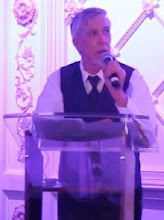
"Tichborne's Elegy" read by Iain McGilchrist.

Sunday, May 16, 2010

Boy Remembers in the Field / Raymond Knister


Boy Remembers in the Field

What if the sun comes out
And the new furrows do not look smeared?

This is April, and the sumach candles
Have guttered long ago.
The crows in the twisted apple limbs
Are as moveless and dark.

Drops on the wires, cold cheeks,
The mist, the long snorts, silence . . .
The horses will steam when the sun comes;
Crows go, shrieking.

Another bird now; sweet . . .
Pitiful life, useless,
Innocently creeping
On a useless planet
Again.

If any voice called, I would hear?
It has been the same before.
Soil glistens, the furrow rolls, sleet shifts, brightens.

~~
Raymond Knister (1899-1932), 1923
from Collected Poems, 1949

[Poem is in the public domain in Canada and the European Union]

Raymond Knister biography

Saturday, May 15, 2010

A Sonnet of the Moon / Charles Best


A Sonnet of the Moon

Look how the pale queen of the silent night
Doth cause the ocean to attend upon her;
And he, as long as she is in his sight,
With his full tide is ready her to honor:
But when the silver wagon of the moon
Is mounted up so high he cannot follow,
The sea calls home his crystal waves to moan,
And with low ebb doth manifest his sorrow.
So you that are the sovereign of my heart
Have all my joys attending on your will;
My joys low-ebbing when you do depart,
When you return their tide my heart doth fill:
     So as you come and as you do depart,
     Joys ebb and flow within my tender heart.

---
Charles Best (1570-1627)
from A Poetical Rhapsody (2nd edition), 1608

[Poem is in the public domain worldwide]

"A Sonnet of the Moon" read for LibriVox. Courtesy Audio Books.

Charles Best biography

New Bettywork coming in June.

Interestingly (to me and possibly to some others), I find myself writing another Bettywork. Drafts of the individual strophes are being published on alt.arts.poetry and alt.arts.poetry.comments, and final versions will appear here on the blog in June. The new effort is called "Betty's OS", and will feature computer operating systems. (Betty's OS will of course be Red Hat).

If that sounds as if I didn't consciously set out to write "Betty's OS," the impression is correct; I didn't. Nevertheless, I can see reasons for doing it right now. Whether those were reasons I held unconsciously before, or ones I've come up with since to justify the effort, doesn't seem to matter.

First, I wanted to get writing again. I went into a creative slump after I quit smoking at the end of February (and also got busy with compiling April magazine) and wrote only one very short, quick poem ("Orbison") through March and April. The rigid format of a Bettywork makes it a good one for returning to writing, as it's relatively easy to write in it without worrying about how well one's doing (as there's really only one way to do it).

Second, I wanted there to be more to Betty than the one datum. People have been asking me about her, and I've had to think about those questions. There's no reason (except for the practical problem of finding a suitable list) not to write a "Betty" poem about every interesting fact about the character. Similarly, each list gives both the opportunity to introduce new words and word-combinations, and the challenge of putting those words into lines using the available poetic conventions and constraints (lots of alliteration and assonance/consonance, much repetition, very little rhyme or meter).

So I'm now considering "Betty's OS" to be only the second in a continuing series. Another thing I've been thinking of in that light is renaming the original "Betty" (to "Betty's Hat") to emphasize that it's just one of a bunch. Not that they'll all be equal to that heroic effort; except for one imagined future Bettywork, about Betty's favourite band, I expect they'll all be much shorter. In the new one, for example, the first four strophes (A-D) come in at 150 lines, shorter than the A strophe of the first. That's not a bad thing, though, since shorter works with shorter strophes may be more accessible, better as an introduction to the type.

I also see the blog format as the ideal place to post these new Bettyworks, for the same reasons I began this  blog to post the original. The monthly archive feature allows one to post long works over the course of a month, as a series of short pieces, and retrieve and read them back later as either one long continuous work or separate short works. So far, three longer works have been archived that way:


Every second month has been devoted to archiving a long work; a trend that will continue in June.

Friday, May 14, 2010

The Sun Cup / Archibald Lampman

       
The Sun Cup 

The earth is the cup of the sun,
That he filleth at morning with wine,
With the warm, strong wine of his might
From the vintage of gold and of light,
Fills it, and makes it divine.

And at night when his journey is done,
At the gate of his radiant hall,
He setteth his lips to the brim,
With a long last look of his eye,
And lifts it and draineth it dry,
Drains till he leaveth it all
Empty and hollow and dim.

And then, as he passes to sleep,
Still full of the feats that he did,
Long ago in Olympian wars,
He closes it down with the sweep
Of its slow-turning luminous lid,
Its cover of darkness and stars,
Wrought once by Hephaestus of old
With violet and vastness and gold.

~~
Archibald Lampman (1861-1899)
from Lyrics of Earth, 1895

[Poem is in the public domain worldwide]

Archibald Lampman biography

"The Sun Cup" read for LibriVox by Larry Wilson. Courtesy Books:Two.

Tuesday, May 11, 2010

The Gravedigger / Bliss Carman

   
The Gravedigger

Oh, the shambling sea is a sexton old,
And well his work is done.
With an equal grave for lord and knave,
He buries them every one.

        Then hoy and rip, with a rolling hip,
        He makes for the nearest shore;
        And God, who sent him a thousand ship,
        Will send him a thousand more;
        But some he'll save for a bleaching grave,
        And shoulder them in to shore,—
        Shoulder them in, shoulder them in,
        Shoulder them in to shore.

Oh, the ships of Greece and the ships of Tyre
Went out, and where are they?
In the port they made, they are delayed
With the ships of yesterday.

He followed the ships of England far,
As the ships of long ago;
And the ships of France they led him a dance,
But he laid them all arow.

Oh, a loafing, idle lubber to him
Is the sexton of the town;
For sure and swift, with a guiding lift,
He shovels the dead men down.

But though he delves so fierce and grim,
His honest graves are wide,
As well they know who sleep below
The dredge of the deepest tide.

Oh, he works with a rollicking stave at lip,
And loud is the chorus skirled;
With the burly rote of his rumbling throat
He batters it down the world.

He learned it once in his father's house,
Where the ballads of eld were sung;
And merry enough is the burden rough,
But no man knows the tongue.

Oh, fair, they say, was his bride to see,
And wilful she must have been,
That she could bide at his gruesome side
When the first red dawn came in.

And sweet, they say, is her kiss to those
She greets to his border home;
And softer than sleep her hand's first sweep
That beckons, and they come.

Oh, crooked is he, but strong enough
To handle the tallest mast;
From the royal barque to the slaver dark,
He buries them all at last.

        Then hoy and rip, with a rolling hip,
        He makes for the nearest shore;
        And God, who sent him a thousand ship,
        Will send him a thousand more;
        But some he'll save for a bleaching grave,
        And shoulder them in to shore,—
        Shoulder them in, shoulder them in,
        Shoulder them in to shore.

~~
Bliss Carman (1861-1929)
from Ballads of Lost Haven, 1897

[Poem is in the public domain in Canada, the United States, and the European Union]

Bliss Carman biography

Monday, May 10, 2010

To Daffodils / Robert Herrick

     
To Daffodils 

Fair daffodils, we weep to see
   You haste away so soon;
As yet the early-rising sun
   Has not attain'd his noon.
                 Stay, stay
      Until the hasting day
                 Has run
      But to the evensong;
And having prayed together, we
      Will go with you along.

We have short time to stay, as you,
   We have as short a spring;
As quick a growth to meet decay,
   As you, or anything.
                 We die
      As your hours do, and dry
                 Away
      Like to the summer's rain;
Or as the pearls of morning's dew,
      Ne'er to be found again.

~~
Robert Herrick
from Hesperides, 1648

[Poem is in the public domain worldwide]

Robert Herrick biography

"To Daffodils" read by Ben W. Smith. Courtesy Ben Reads Poetry.